


“I think I put a lot of effort into making something I feel like I haven’t seen prior to this, but that reflects something that people might have felt before.” - Adrian Murray
POCKET MIRROR is simultaneously Adrian Murray’s most emotionally affecting and unsettling film yet. Through its slow-burn pacing, hypnotic visual language, and unrelenting attention to the mundanity of everyday life, the film captures how us, as humans, can become increasingly beholden to our devices and gradually lose our sense of autonomy.
Maisie (Sofia Banzhaf), a retail worker whose life appears stable on the surface, spends her days working, scrolling on her phone, and seeing her boyfriend when their schedules align, yet cannot shake the feeling that something is wrong. She now finds herself confiding in something that is always available to her and creates a positive feedback loop: a chatbot. Murray, like the film’s title suggests, incisively mirrors the anxieties of modern communication and the fragile boundaries between connection and alienation.
In this conversation, Murray and producer Sennah Yee join Thanh following the film’s premieres at the Vancouver International Film Festival and Calgary International Film Festival for a long-brewing conversation on their creative processes, the evolution of the script, and the shared anxieties that find expression in Murray’s piercing third feature.
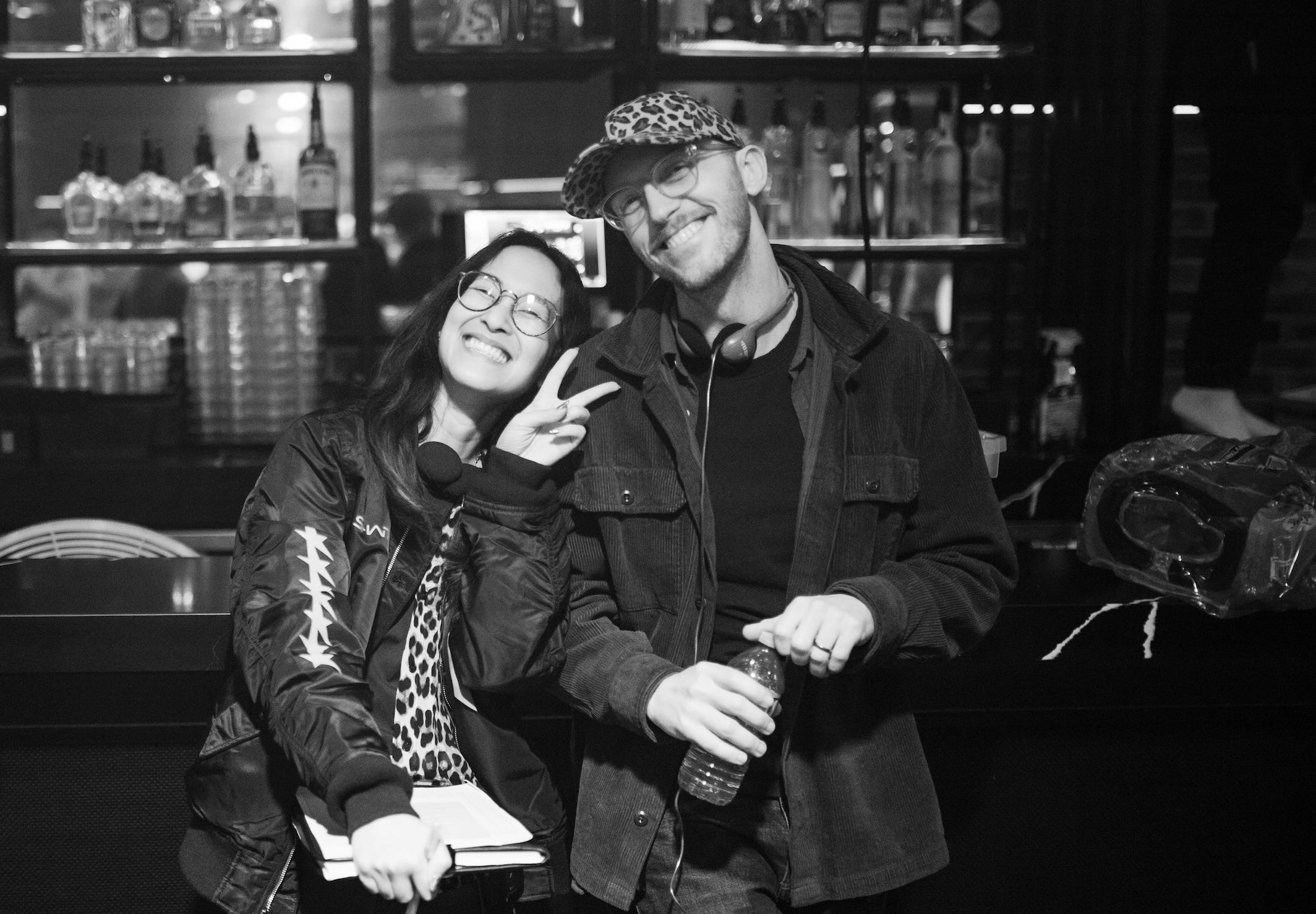
Thanh Lieu: Sennah and Adrian, how are you both feeling?
Adrian Murray (Writer/Director): I feel great. It feels really good to have finally screened our film. Filmmaking always takes longer than I expected, so sometimes I always forget that this part - getting to show it to the world - is almost like a catharsis.
I’m always intrigued by the headspace directors are in during film festivals. You spend so much time making moving images precisely because words alone can’t fully encapsulate what you want to express. But with film festivals, you have to talk about the film many times. Is that a funky feeling for you, or does it come quite naturally?
Adrian: Not really, no. Sometimes a Q&A can feel a bit unnatural because the film is already a complete piece on its own, so getting asked “What is it about?” can feel a bit strange. That said, I’ve lived with this movie for so long that I do enjoy talking about it.
How long have you been brewing the idea for POCKET MIRROR for?
Adrian: It actually came together quite quickly. Sennah pointed out that this was the fastest I’ve ever written a piece, which took me about eight months from the initial idea to the first draft. It’s always hard to pinpoint exactly how long a project takes, though. My brain just gathers and collects scattered story ideas like tumbleweeds until they collide and reveal new launching points.
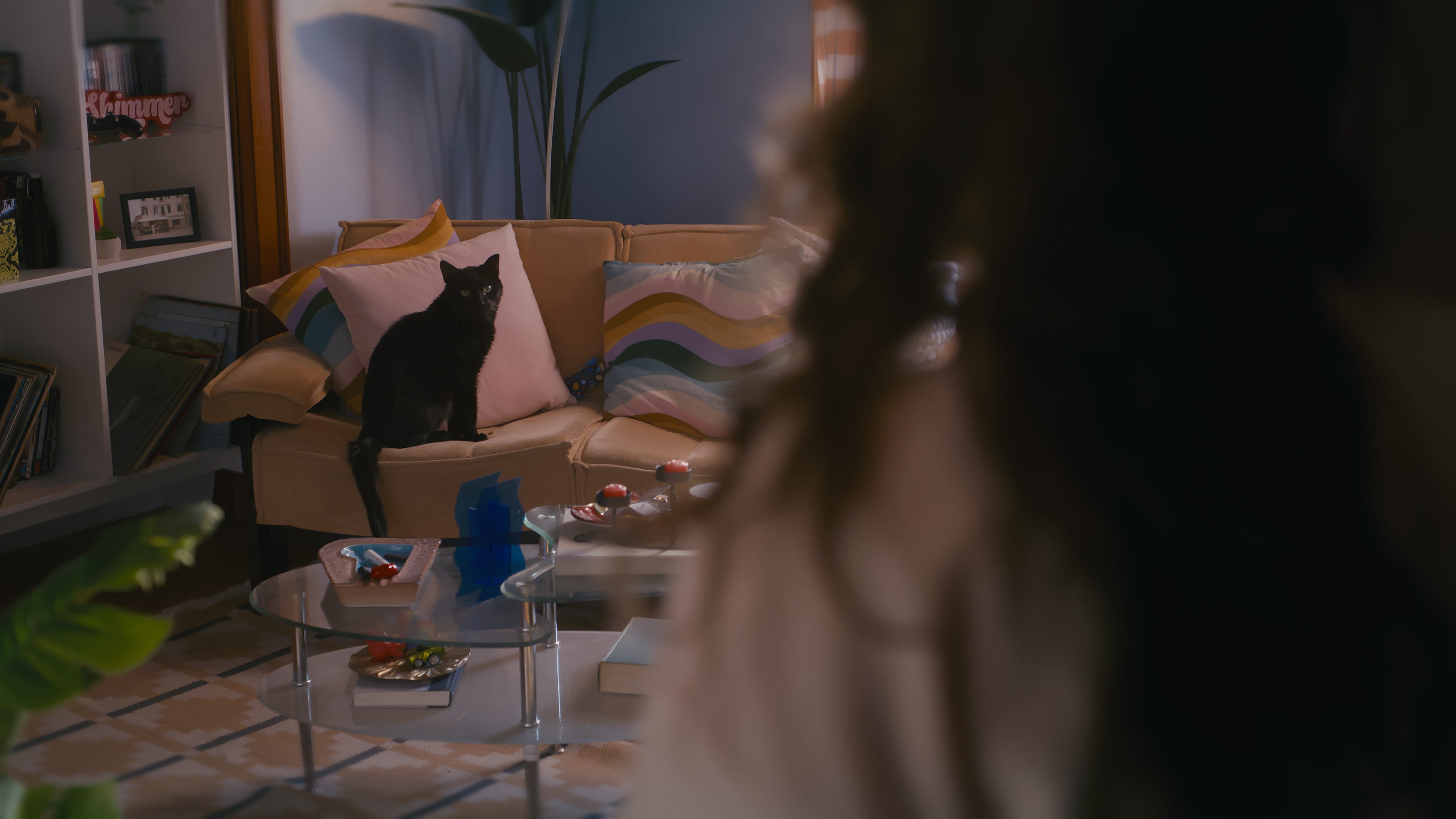
The first idea came from someone explaining that their cat had been swapped. It started out as a totally characterless scene in my head, more of a concept than a story. But then that crossed paths with ideas about AI and the general empty feelings of the times, and it just took off from there.
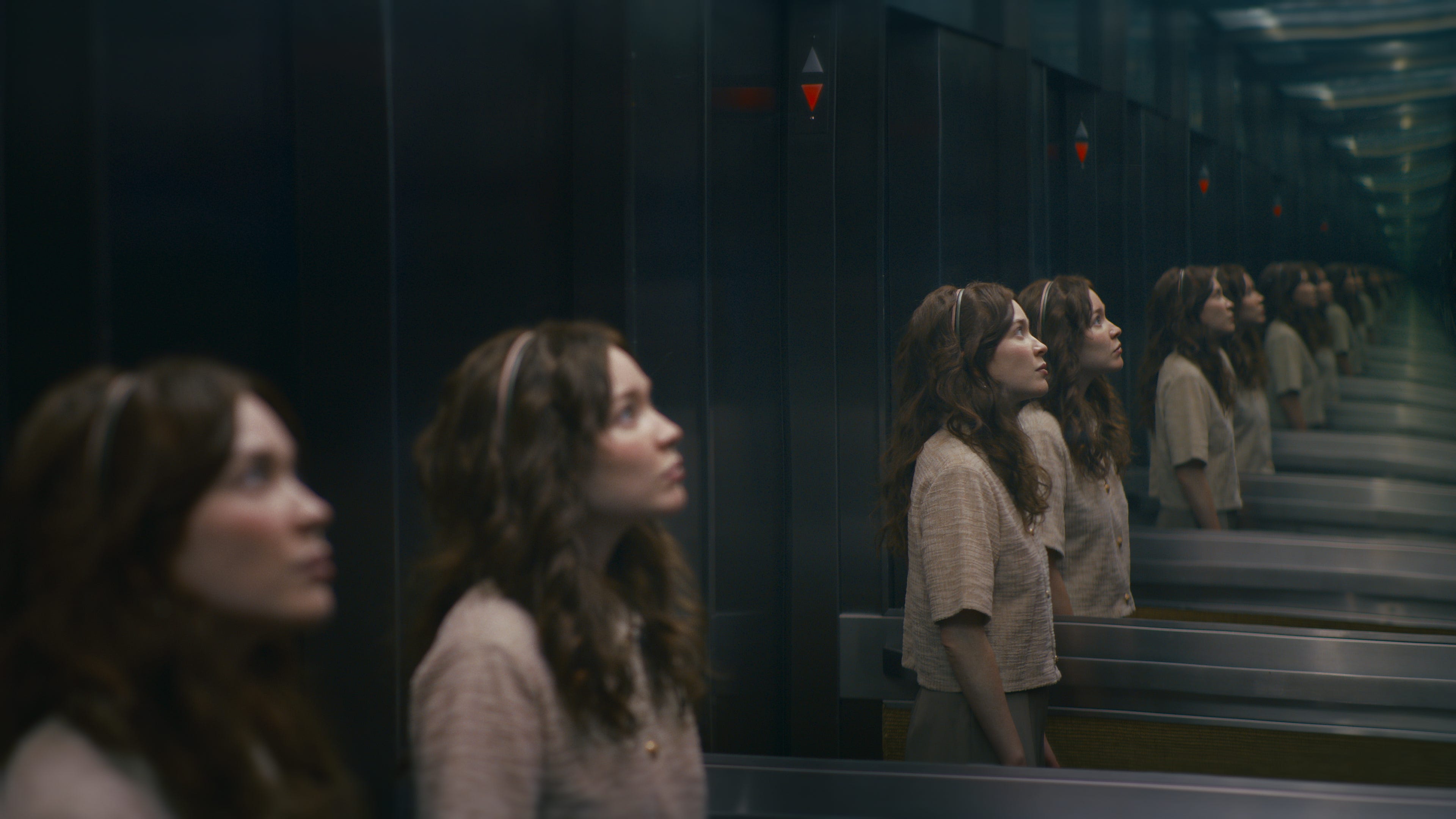
Like your previous film, RETROGRADE (2022), you’ve mentioned being drawn to wide shots and long takes. For POCKET MIRROR, I’m thinking specifically of the long, uninterrupted breakup scene that is shot in this wide frame. In the moment, it was quite uncomfortable to watch because the audience had absolutely no wiggle room. You plunge us right into the strangeness of the scene as Maisie (Sofia Banzhaf) reads her ChatGPT-drafted breakup text. The camera doesn’t cut away from her, and we don’t even see her boyfriend, Nima (Maz Khatam), for the entirety of the scene.
When you’re scripting a story, do you always have in mind these long inflectional points where the discomfort is meant to simmer under a static camera?
Adrian: I knew I’d be shooting this film similarly to my past work, though this one actually has more coverage than my previous films. We did shoot versions of the breakup scene that were cut like a conventional two-person conversation. But we found that doing it this way lost that strangeness and discomfort you mentioned.
Another reason I love shooting long and wide is because it shows the actors’ full performances: their complete expressions and physicality. I don’t want to dictate how the audience should feel. I simply present these scenarios and elements so you can decide what to make of them. I’m not going to force a specific emotional beat or inflection beyond the reality of the situation, really. For me, it actually feels like the most neutral way to tell a story. It gives the audience a free lane to connect with their own fears and feelings.
I feel like you can’t really talk about this film without bringing up surveillance. In this particular scene, because the camera is angled down at Maisie, it almost feels like the audience is being positioned to surveil her every move. Do you think that’s a fair way to interpret that shot?
Adrian: I think so. Even though the film isn’t necessarily about a kind of physical surveillance, she is in fact living in that state of surveillance. This time, it’s AI and technology. When Maisie puts all her thoughts and feelings into a chat bot, it deeply probes your brain and puts them into their data bases. For me, it’s really surveillance from the inside out.
Sennah, when was the first time Adrian brought up the idea for POCKET MIRROR to you?
Sennah Yee (Producer): I think it was quite early in his writing process. I remember that, at the time, Maisie was originally written as an influencer. The cat doppelgänger element was already there, and Adrian was also toying with themes of infidelity, truth, gaslighting, bending reality within a relationship.
He first came up with the concept during COVID when we were bouncing ideas back and forth. I remember liking the character of Maisie right away. Like his previous work, she exists in this lonely, isolated world and feels completely untethered. But POCKET MIRROR feels like Adrian’s most emotional film yet because there’s so much longing and desire. It stands as the most natural evolution of what his third feature can be.
Adrian: This film has the biggest plot of anything I’ve ever done. But the main narrative driver, and the most interesting thing to me, was trying to filter that plot through the pinhole perspective of just one character. You’re only seeing snippets of a much larger narrative happening around you.
I want to latch onto what Sennah just shared, which is Maisie was first written as an influencer. Why was that the starting point, and when did she become the character we know now?
Adrian: I think when Maisie was initially written as an influencer, it gave her more control over the devices around her, whereas I related more to someone who is at the mercy of technology. Someone who is just passively using their devices. I was much more interested in exploring that kind of passivity.
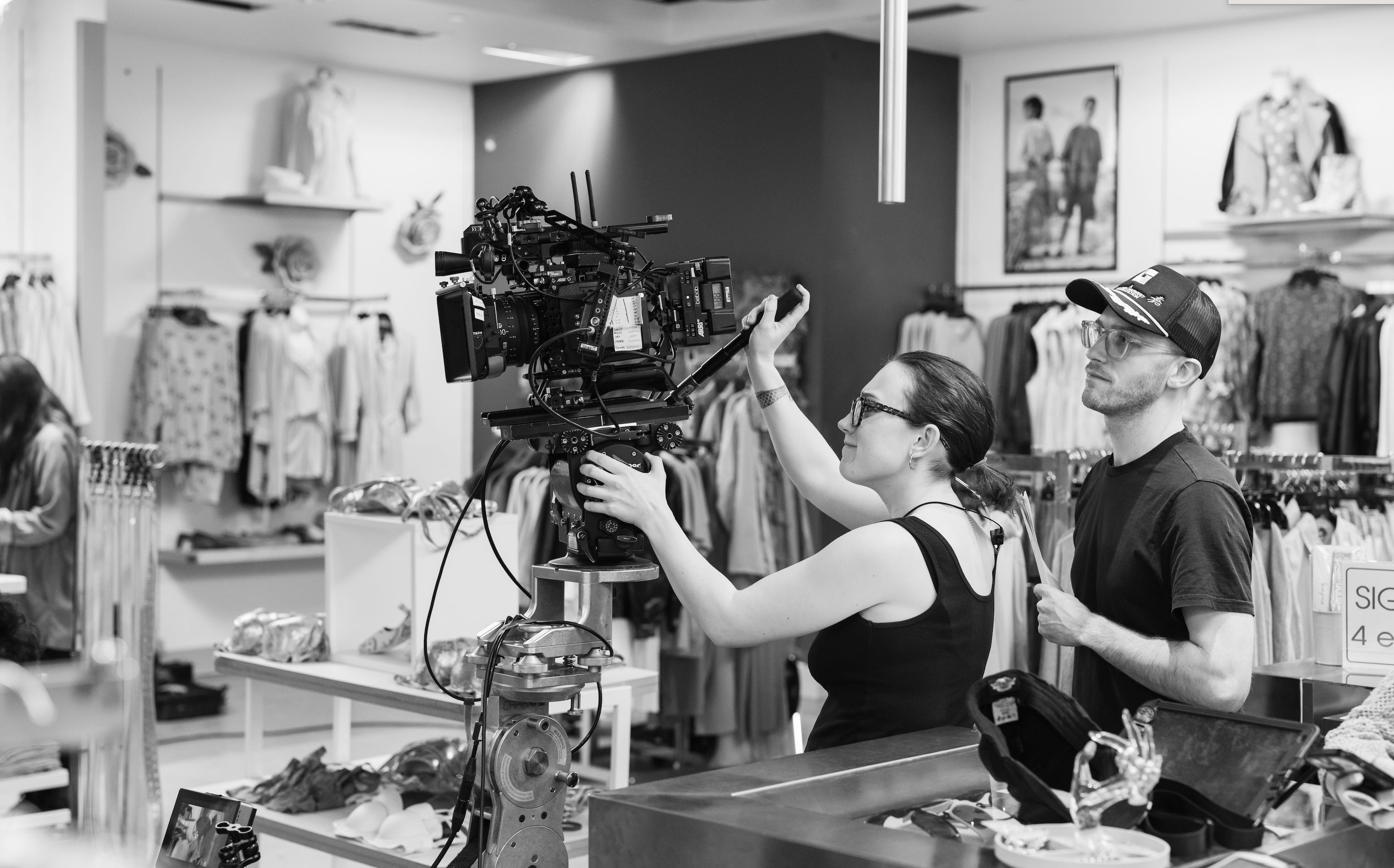
Sennah: I also think her being a retail worker plays a huge part in it. We immediately see the parallel between a retail worker and a robot moving through the space, like Maisie following customers and tailing people around the store and asking if they need help.
Adrian: It was actually the introduction of the robot that made me recalibrate Maisie’s character. I really wanted to draw out that direct comparison between her experience as a retail worker and the function of that service robot.
Another poignant aspect of the film is how the production design of her spaces, like her home and the empty mall, simultaneously shapes her world without giving us any direct access to her interior life. I mean, Maisie’s apartment is so dimly lit most of the time, so it’s hard for the audience to figure out exactly who Maisie is. Instead, we only get small glimpses of her personality through the prompts she feeds into the chatbot and her brief interactions with her boyfriend.
How did you approach having her character and the spaces she moves through maintain that tension?
Adrian: When Sofia first read the script, she said she felt like Maisie was an NPC regaining consciousness, which I think is very appropriate. [Laughs] I talked to our production designer about how the decor in her house should reflect that. The things in her home are items the store would have used as decorations at one point. For instance, the very first image you see on her wall is a poster of a shoe, which looks exactly like the marketing posters in the store. Her personality has essentially been passively forced upon her just by existing in these environments. Even in a space that is ostensibly her own, her work is constantly bleeding into it.
That opening shot, having it feel like a ghostly, floating presence, came from wanting the perspective of the cat to feel like a spirit moving through her space. While editing, my co-editor Marcus, who is a huge sci-fi fan, pointed out that it felt like the opening of Alien (1979), where the camera drifts through the empty ship while everyone is still asleep, establishing the space before anyone wakes up.
Our costume designer also told me early on that the film felt like a “soft sci-fi.” I was actually really happy to hear that because, visually and tonally, we wanted it to feel like a sci-fi world where she is living in a future that is, frankly, pretty boring.
But pretty dystopian.
Adrian: Totally. It’s mind control in these tiny ways, like how her house is just decorated with leftover crap and garbage from her retail job. Back when I worked retail, I always felt like the songs playing all day in the mall were either trying to tell me something or secretly hypnotizing me. Like brainwashing. We really wanted to use her house to lean into those subtle indicators that her mind wasn’t completely her own.
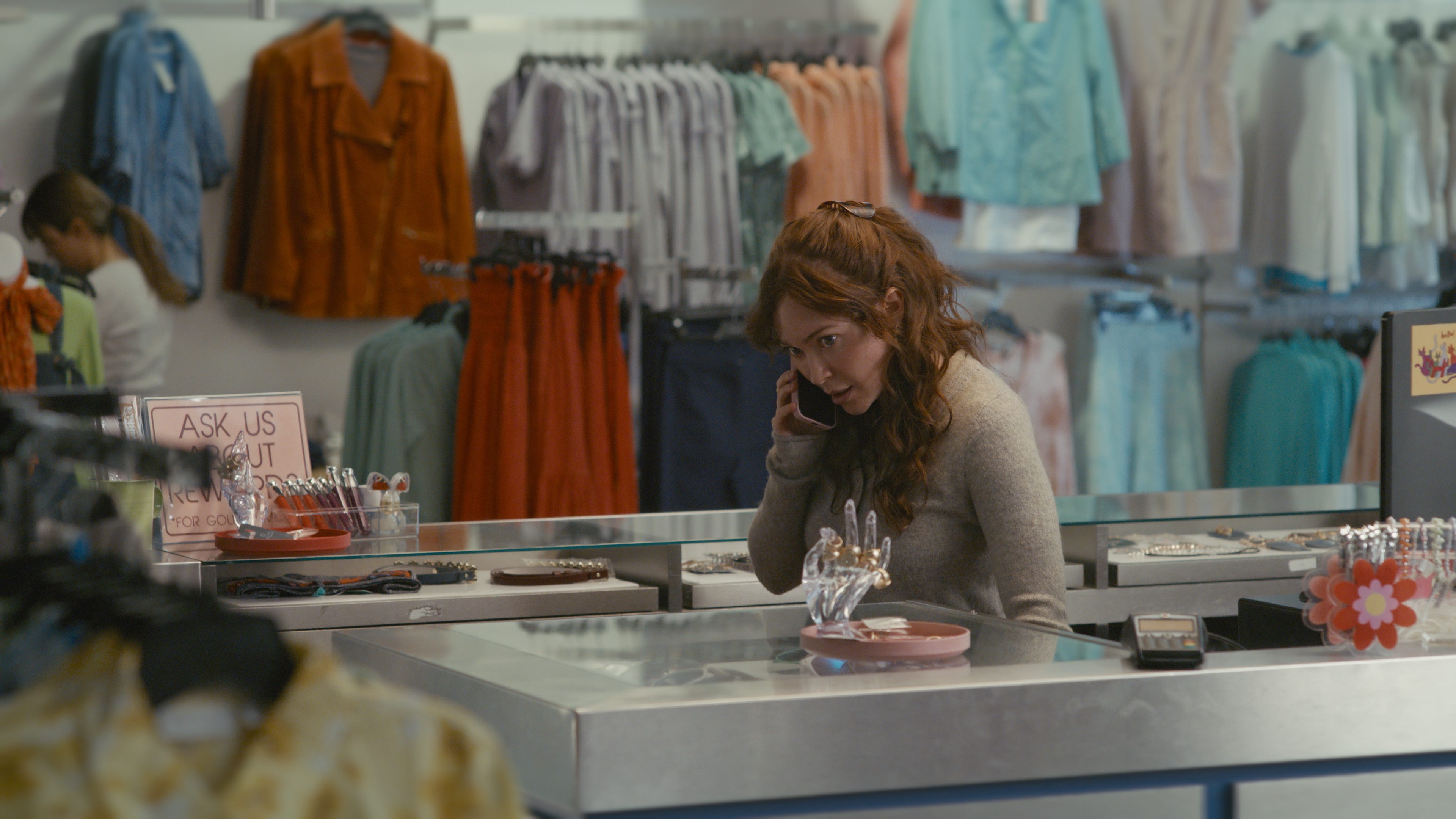
Sennah: To add to that, we were very interested in liminal spaces. The mall is a dying space, something that is on its way out but still awkwardly existing in a state of limbo. I think it perfectly represents the headspace our characters inhabit. There is a constant bleeding from the mall into her home, or a sense of two ships passing in the night with her boyfriend.
They are characters in transit, but they aren’t actually going anywhere.
Adrian: Everywhere we live is built to be destroyed and replaced by something else, which is a major theme of the movie. In very subtle, everyday ways, nothing overly dramatic, things are constantly being replaced by something newer. Yet, sometimes you are supposed to look at it and believe that nothing has changed at all.
That also reminds me of the lexicon we use of real estate in general: depreciation, new development, re-development.
Adrian: There’s a term that really stuck with me: solastalgia, which is essentially nostalgia for a climate or environment that no longer exists due to climate change. Although this movie isn’t explicitly about climate change, it touches on something similar, which is how we’ve managed to turn the climate itself into a liminal experience. It’s that eerie feeling of mourning a reality while you’re still standing right inside it, knowing you won’t ever be able to get it back.
I wanted to ask you about writing the questions being typed into ChatGPT. There’s this one scene where Maisie starts typing, ‘What’s wrong with my cat?’ and then quickly changes it to, ‘Why is my brain playing these songs over and over again?’ Where did those lines come from? I’m assuming you were testing ChatGPT yourself to see what fit the script. It must have been a pretty meta experience.
Adrian: 100%. In terms of the questions asked, they were like when ChatGPT first came out. I remember there was that time when it was just sort of this party trick where you ask it anything you want. Like that question, ‘What’s wrong with my cat?’ or ‘Why does my nose get itchy?’ I don’t know, you just ask whatever and you’re excited that it can actually respond.
So, just so you know, the responses were actually scripted by me, but it was, of course, informed by having used ChatGPT and learning how it speaks, which is interesting because all the telltale signs of how ChatGPT speaks in the movie have now changed, right? Back when we shot it, one of the telltale signs was that it always uses the em dashes. But then, because that became too obvious, ChatGPT changed it, and now their telltale signs are different. It’s always trying to hide itself again and again and again. So it was just informed by the type of responses that I knew it would give, but I did write those myself. Also, those scenes are animated and not recordings of ChatGPT.
Sennah: Those sequences are also some of the most intimate scenes of the film. They’re one of the only clues we have to know what she feels and to gain access to her interiority, which is so sad because it’s mediated through this chatbot.
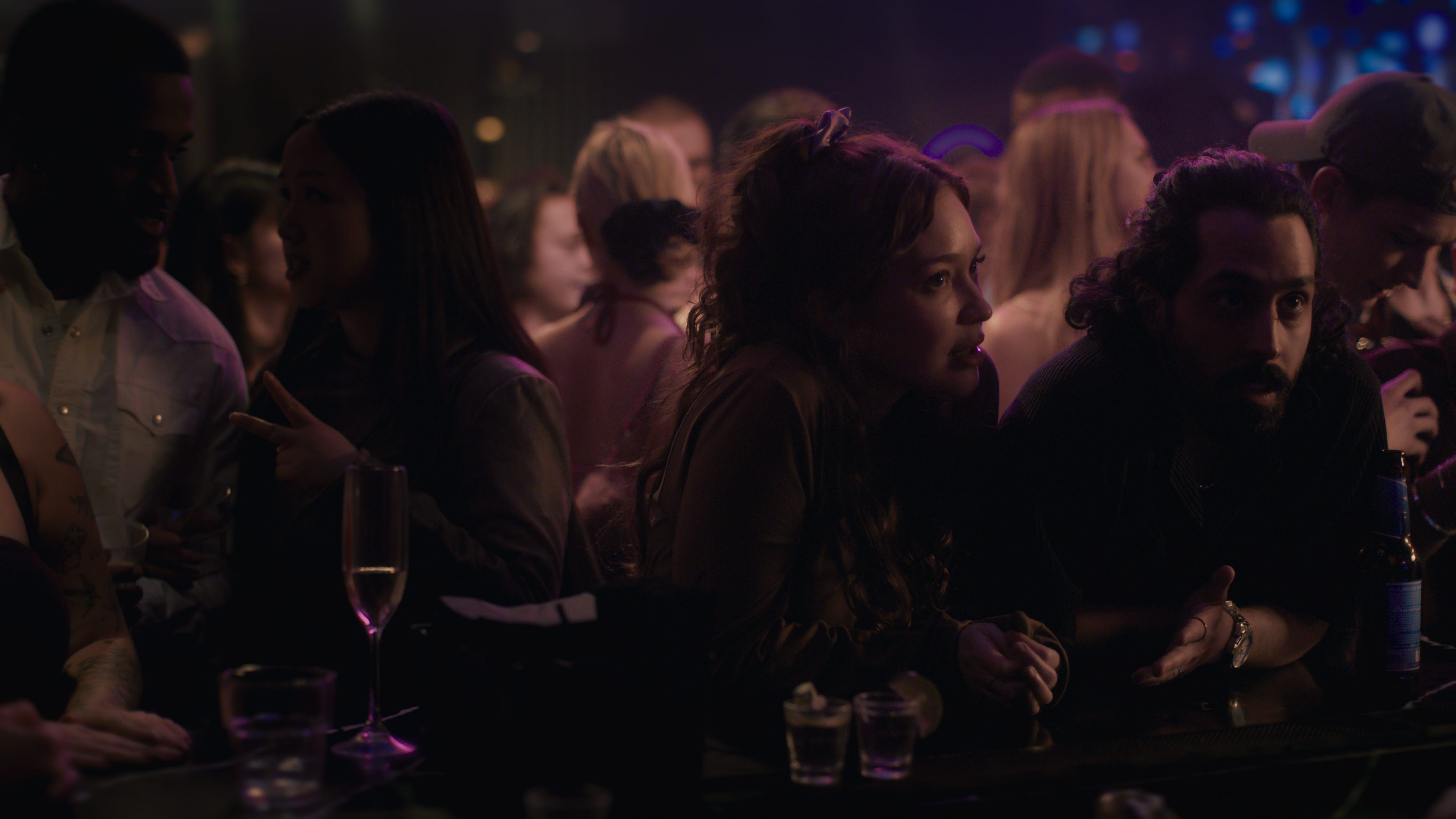
Sennah, you are a poet and a writer. Having worked on this film and deeply thinking through this incredibly prevalent issue of the invasion of technology in not only our daily lives but the very subtleties of the human experience: our words, our behaviours, our language being distorted and inputted into these liminal spaces... how does this entire process make you feel? Knowing that it’s quite the reality of our world now, as someone who holds language so beautifully?
Sennah: Thank you for that, and for asking this question. I feel like what I loved most about the script when I first read it was Adrian’s ability to capture the hauntedness of technology and the looming techno-paranoia. I’ve always thought that words are the one thing I have left that remind me of who I am, so to have this technology spilling out words that are ‘perfect’ is just very strange.
It feels like our language is being taken from us and compounded and manufactured. That definitely appealed to me when I first read the script, along with that eerie feeling of not being able to tell what’s real anymore.
The way you write Maisie and her circumstances, Adrian, makes me feel strangely sympathetic toward her. I pity her, in many ways. It’s as if this co-dependency between her and this technology feels inevitable because her world is already so isolating: from her retail job and the spaces she inhabits to her relationships with others. It keeps spiralling until she reaches a point where she can’t do anything but confide in this 100% responsive, palatable, and ‘understanding’ companion that is a chat bot.
How did you approach writing her character? Was it from a place of doomsday anxiety, or did you have a different angle in mind?
Adrian: It really just came from looking at how commonplace its use has become. She treats the advice of her coworkers with the same level of respect that she gives ChatGPT. When her coworker tells her she should try a liquid diet, she tries a liquid diet. When ChatGPT tells her she needs a vacation, she goes on a vacation. I think Maisie is, in turn, behaving just like ChatGPT: information goes in, information comes out, and most of the time it’s simply echoing that information back at you.
Does it make you feel hopeless making this feel?
Adrian: I wasn’t thinking about hope making this film. [Laughs]
First thing out the door: hope.
Adrian: I think I was more interested in the feelings and emotions around this issue, which is completely beside the point of “what we’re gonna do about it?” It’s more like “what does it do to us?” But now that I think about it, that speaks to how hopeless I felt at the time. [Laughs].
And yourself, Sennah? Do you feel hopeless?
Sennah: I’m tempted to say no! [Laughs] But I do feel that this film works through or is a way of expressing that hopelessness. It’s interesting because now that the film is finally out, the audience’s response has pointed to the fact that it’s not just us who are feeling this way. There is a malaise and techno-paranoia that many people are feeling, too, and that makes me feel less hopeless.
Adrian: And that is quite hopeful, because there are still people who want to feel human, and who feel that there is an absence of that human experience when everything around us wants us to behave like robots. I don’t want to spoil anything about the film, but the ending is truly a litmus test for the viewer: does it feel exciting and hopeful, or does it feel like a breakdown and even worse? Perhaps it’s both of those things.
Sennah and Adrian, thank you so much for the conversation today, and for Pocket Mirror! It’s truly something that I will think about for a long time, but before I dwell on that, I just want to give you guys your flowers.
Adrian: Thank you for your words, Thanh. I think I put a lot of effort into making something I feel like I haven’t seen prior to this, but that reflects something that people might have felt before.
Adrian Murray is a filmmaker based in Toronto, Canada. He is the writer-director of Retrograde (2022) and Withdrawn (2017), which both premiered at Slamdance Film Festival. His third feature Pocket Mirror premiered at the 2026 Vancouver International Film Festival.
Sennah Yee is a writer, editor, and filmmaker based in Toronto. Sennah is the author of the poetry collection How Do I Look? (Metatron Press, Metatron Prize for Rising Authors shortlist) and the children’s book My Day With Gong Gong (Annick Press, Blue Spruce Award nominee). Her collection of movie poems, Rushes, was a finalist for Nightboat’s Poetry Prize, and is forthcoming from Coach House Books in fall 2027. Her writing has been featured in Guernica Editions’ Changing The Face of Canadian Literature: A Diverse Canadian Anthology, Arc Poetry Magazine, The Asian American Writers’ Workshop, and more. Her poetry has been translated into Spanish by Paloma Ediciones and Blackie Books. Sennah is the managing editor of In The Mood Magazine, a film journal of expansive criticism. She has an MA in Cinema & Media Studies, where her thesis focused on gendered robots in pop culture. She is the producer of the feature films Retrograde and Withdrawn, and Pocket Mirror.